
Home > Indoor and Outdoor Air Pollution

Understanding indoor and outdoor air pollution: Sources, health risks, and solutions

Air pollution is one of the most pressing global environmental health challenges. From bustling city streets to rural communities, people are exposed daily to airborne pollutants that threaten both outdoor and indoor air quality. These include emerging and legacy pollutants, volatile organic compounds (VOCs), wildfire emissions, traffic-related air pollution, and emissions from building materials and furnishings.

Increased durations of extreme heat, often tied to urban heat islands, intensify pollution levels and impact  community health in homes, workplaces, and educational settings. Understanding how and where these exposures occur is key to developing effective strategies to protect public health.


Common sources of air pollution in everyday life

Icon of a car

TRAFFIC EMISSIONS

icon of a paint can

BUILDING AND PRODUCT MATERIALS

Icon of buildings

URBAN HEAT ISLANDS

Flame icon

WILDFIRE SOIL POLLUTANTS

Air pollutants come from a wide variety of sources. Some are well known, while others are hidden in everyday materials and environments.

Traffic-related air pollution

Vehicle emissions contribute to high concentrations of particulate matter (PM2.5), nitrogen dioxide (NO₂), and ozone — key pollutants that exacerbate respiratory and cardiovascular diseases. Urban communities near major roadways often experience elevated exposure levels.

Building materials and furnishings

Many indoor air pollutants originate from emissions released by building materials, paints, adhesives, furnishings, and cleaning products. These chemical exposures can lead to long-term health effects, especially in poorly ventilated environments.

Extreme heat and urban heat islands

Heat islands are dense urban areas that produce and store heat, leading to higher temperatures compared to surrounding areas. Extreme heat not only worsens outdoor pollution but also influences indoor air quality. Elevated temperatures accelerate chemical emissions from building materials and reduce ventilation efficiency, increasing pollutant buildup indoors.

Soil and legacy pollutants from wildfires and WUI

Pollutants from wildfires enter soil and can intrude into indoor environments, creating serious health risks. Additionally, these pollutants can be resurfaced and emitted as gases that affect air quality, which can contribute to overall community exposure.

Mitigation strategies to reduce health risks from air pollution

Furniture icon

SOURCE CONTROL

HVAC Ventilation icon

VENTILATION

Heater icon

AIR CLEANING

While air pollution is a global challenge, there are proven methods to reduce exposure and minimize health risks. UL Research Institutes’ Chemical Insights supports a multi-layered approach to reduce the harmful effects of air pollution through prevention and purification.

Source control

The best way to prevent pollution is not to introduce it. Source control is always more effective than removing pollutants after the fact. Methods of source control include selecting products and furnishings that are independently verified as low-emitting or free of specific chemicals. For products that may emit harmful chemicals, airing them out first can dramatically reduce the chemicals introduced to a closed environment.

For example, kerosene heaters, spray cleaners, and air fresheners all create and release pollutants into the air. It is best not to use these indoors.

Ventilation

Proper ventilation helps dilute and remove indoor air pollutants by improving air circulation and cleanliness. Mechanical and natural ventilation systems can dramatically improve indoor air quality in homes, offices, and schools. Routine maintenance on mechanical ventilation systems, such as HVACs, is key to their effectiveness.

Air cleaning

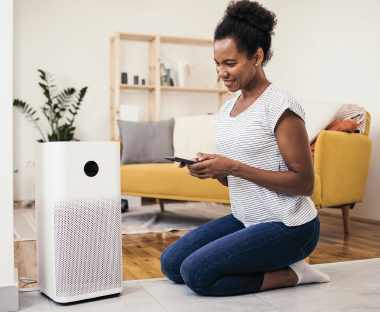
Air pollution and airborne viruses can be removed from indoor environments using purpose-made or DIY filtration methods. Advanced air cleaning technologies such as high-efficiency particulate air (HEPA) filters, activated carbon systems, and emerging air purification technologies can significantly reduce air pollutant concentrations indoors.

Why air pollution research matters

Wildfire creating plumes of toxic smoke.

The health impact of air pollution can extend far beyond short-term irritation. Acute exposure can exacerbate preexisting conditions such as asthma and underlying cardiorespiratory disease. Chronic exposure is associated with increased risk of new or exacerbation of existing asthma, cardiovascular disease, particularly among children, the elderly, and at-risk populations.

Communities located near high-traffic zones or in urban heat islands often face disproportionate exposure risks to specific types of air pollutants. By identifying these inequities and studying their underlying causes, Chemical Insights aims to support healthier, more resilient environments.

In-house research and community collaboration

Chemical Insights conducts both in-house research and collaborates with research and community organizations to better understand the chemical and physical health hazards linked to air pollution. This work is both scientific and community-focused, recognizing that exposure risks are not evenly distributed across populations.

We aim to: 

  • Advance understanding of indoor and outdoor air pollution.
  • Identify practical mitigation strategies to protect community health.
  • Develop scientific resources to guide policy, regulation, and design standards.
  • Empower organizations and individuals to make evidence-based decisions about air quality.

Our researchers study pollutants in real-world environments, examining the composition, emission rates, and health implications of chemicals found in everyday life. Some of our current research includes: 

Volatile organic compounds (VOCs): Hidden pollutants in everyday spaces

Video cover image

What are VOCs?

Volatile organic compounds are carbon-based chemicals that pose serious health risks.

VOCs pose a risk to indoor air quality

Among the most widespread pollutants are volatile organic compounds (VOCs). This broad class of chemicals are released from a variety of sources including paints, adhesives, cleaning products, furnishings, building materials, and even office equipment. 

Indoors, where ventilation is often limited, VOC concentrations can be several times higher than outdoors. Prolonged exposure has been linked to respiratory irritation, headaches, fatigue, and long-term health concerns such as organ damage or cancer, depending on the types of VOCs and their concentrations. 

We actively study VOC emissions in consumer and building materials to better understand their release patterns, chemical transformations, and associated health outcomes. This work informs safer material choices and improved ventilation strategies that reduce VOC exposure in homes, workplaces, and educational settings.

Man coughing at work

Frequently asked questions (FAQs)

You may be interested in