Home > 3D Printing

3D Printing Emissions and Its Impact on Human Health

Key Takeaways

  • 3D printing can release VOCs, ultrafine particles, and other airborne contaminants that may affect indoor air quality and human health.
  • Emission levels vary based on printer type, materials, operating conditions, and ventilation, making evidence-based safety practices essential.
  • Chemical Insights conducts original research to better understand 3D printer emissions across homes, schools, healthcare settings, makerspaces, and industry.
  • Our findings support the development of testing methods, certifications, and internationally recognized standards that help advance safer additive manufacturing.
  • Explore the latest research, practical guidance, and safety recommendations for reducing exposure to 3D printer emissions.

Understanding 3D Printing Emissions

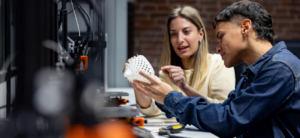
Two college students look at an 3D-printed object that they made.

The increasing popularity of 3D printing has revolutionized products and designs from industrial prototyping to educational, commercial, and residential environments. This technology’s prominence in non-industrial spaces like classrooms, makerspaces, and residence halls makes understanding the health and safety risks paramount. 

While 3D printing offers innovation and potential, the process introduces a critical public health concern – the potential release of airborne contaminants during operation. To address the public health risks associated with 3D printing, our research helps identify chemical emissions and deliver science-based solutions to enhance 3D printing safety across user groups.


What is 3D printing?

3D printing is a form of additive manufacturing that builds three-dimensional objects layer by layer from a digital file. This technology is used across many sectors, including: 

  • Medical and dental devices
  • Aerospace and defense components
  • Automotive parts
  • Educational tools 

UL Research Institutes’ Chemical Insights’ current research focuses on the two most common consumer-grade technologies: Material extrusion (filament-based) and Vat polymerization (resin-based). Despite their widespread use, both techniques introduce contaminants that can pose human health hazards throughout printing.


What is the difference between filament and resin 3D printers?

Filament-based printers and resin-based printers use different technologies and materials, which can result in different emission profiles. Filament printers typically heat thermoplastic materials to create objects layer by layer, while resin printers use liquid photopolymer resins that are cured using light.

Because the materials and processes differ, our researchers evaluate these technologies separately to better understand the emissions and exposure impacts of each.

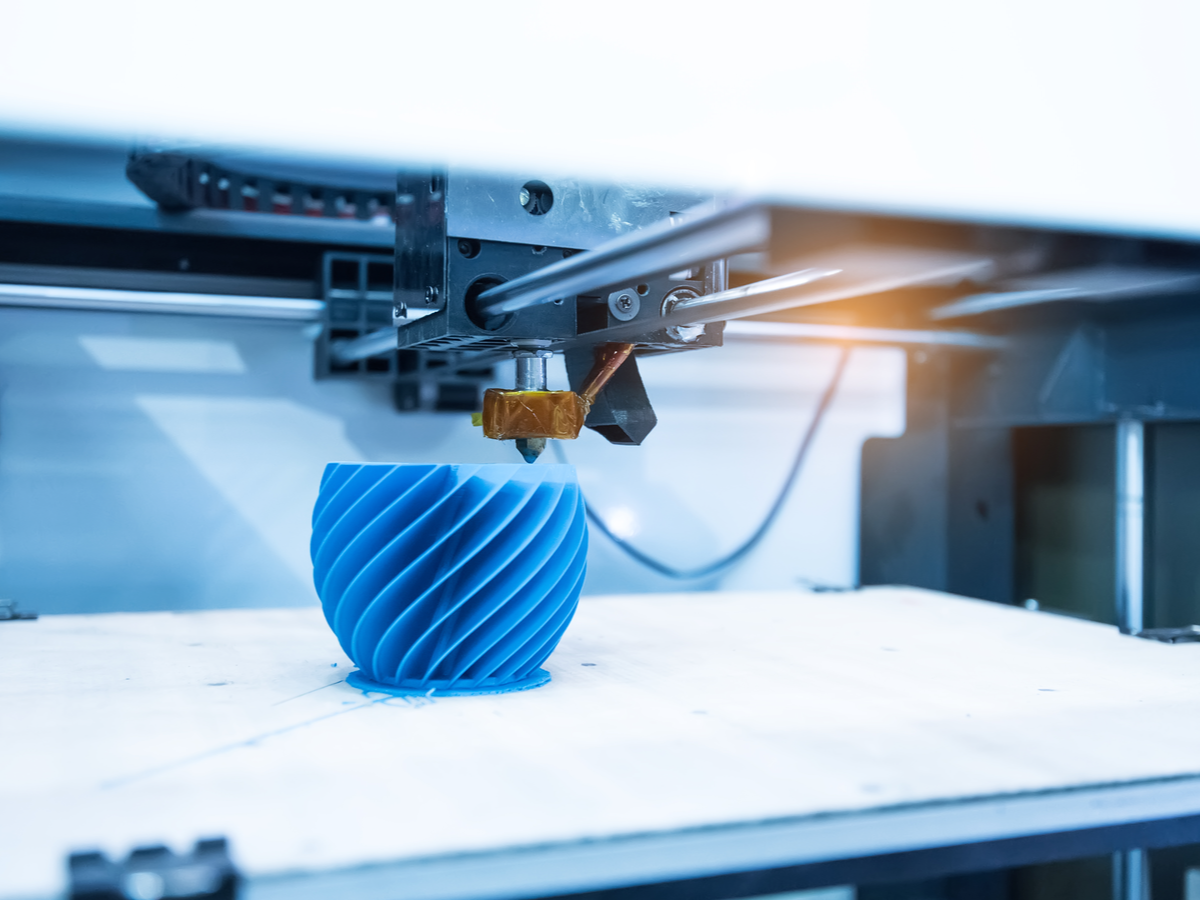
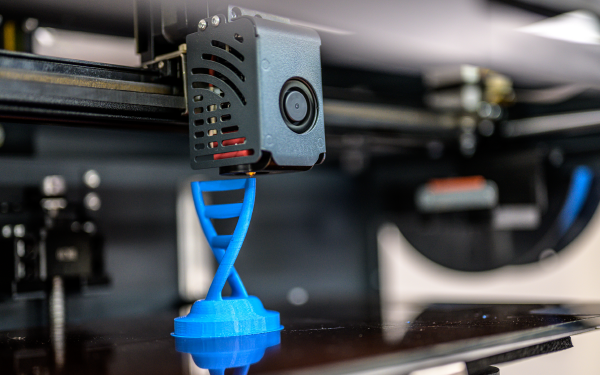
3D printing machine in the process of printing a solid blue, spiraled object which sits on a platform.
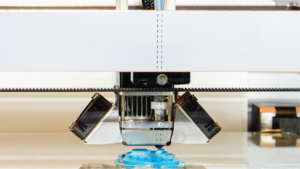
Image of a fused filament fabrication 3D printer.
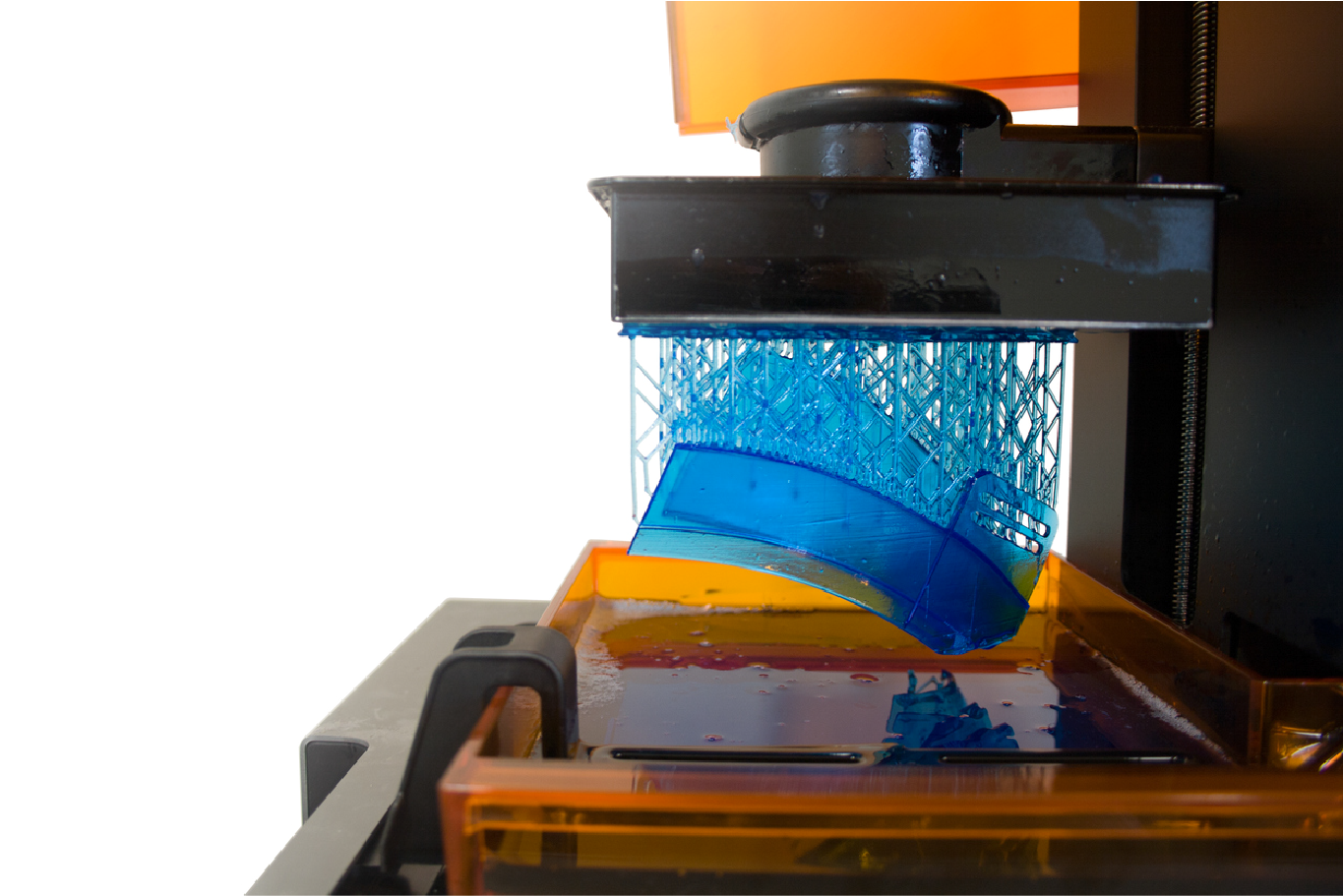
Image of a stereolithography (SLA) printer, which is a popular resin-based 3D printing method.
Image of a stereolithography (SLA) printer. This is a popular technology for resin-based 3D printing.

Emissions and Health Risks Posed by 3D Printing

Both filament and resin printers emit a number of chemical hazards that can have negative health consequences if not properly controlled. The primary concerns are exposure to volatile organic compounds (VOCs), ultrafine particles, hazardous chemicals, as well as risks from burns and other forms of mechanical injury.


VOCs

During operation, 3D printers release numerous VOCs, often exceeding 200 distinct species. VOCs easily distribute into the air and can be inhaled. 

Many detected VOCs are known irritants, odorants, and carcinogens. Short-term exposure to common VOCs, such as tetrahydrofuran, can cause eye, nose, and throat irritation in addition to headaches and nausea. Long-term exposure is associated with damage to the liver and central nervous system, cardiovascular disease, cancer, and asthma. 

Resin poses additional hazards. In the vat polymerization of 3D printing technique, a vat filled with a resin is cured — or hardened — into a solid by exposure to UV light. The uncured resin itself is a source of VOCs that can be emitted even when the printer is simply loaded and turned off.


Ultrafine Particles (UFPs)

Some 3D printing processes, such as filament-based devices, generate UFPs as materials are heated and deposited during printing. 

UFPs are generally smaller than 100 nanometers. Due to their minuscule size, they can be inhaled deep into the lungs, absorbed into the bloodstream, and potentially even reach the brain. Research found that particle emissions could reach up to one trillion particles per hour. In poorly ventilated spaces, particle mass concentrations (PM2.5) near an operating printer can exceed outdoor levels found near a busy highway.


Chemical exposure

Specific chemical hazards include: 

  • Solvents (Isopropanol): Detected consistently at high concentrations attributed to its use as the wash solvent during the post-printing process. 
  • Carcinogens: Chemicals of concern detected in the printing area included acetaldehyde and formaldehyde. Other detected possible carcinogens included (1-methylethyl) benzene and 1-4-dichlorobenzene. 
  • Other hazards: The detected chemicals include a total of 29 chemicals of concern classified as irritants, sensitizers, asthmagens, and developmental toxicants in the printing area.
  • Dermal Exposure: Resins and solvents contain sensitizers that can cause allergic reactions and skin irritation.


Burn, shock, and other mechanical risks

In addition to airborne emissions, the 3D printing process presents additional safety risks: 

  • Burns: Contact with hot surfaces, such as the heated nozzle and build plate, poses a risk of burns 
  • Mechanical and Electrical: Hazards exist from unguarded moving parts and internal electrical components. 

Safety Concerns of 3D Printing in Real World Settings

Dental schools and offices

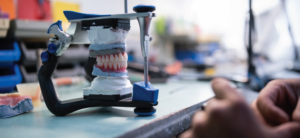
dental prosthesis made with dental resins

Dental resin 3D printing is a key technology in modern dentistry for crowns, bridges, and dentures. Chemical Insights researched exposure to chemical hazards within dental schools during the resin 3D printing and post-printing processes. 

In particular, 3D printing, using resin is of high concern in dental school settings. Research in a university dental school found that the resin 3D printing room had the highest total VOC (TVOC) levels and the greatest number of VOCs detected compared to the grinding area and outdoors. This indicates that the printing process emitted a complex mixture of VOCs. Although the printing and post-printing processes increased specific VOC levels in the educational setting, overall concentrations of hazardous chemicals didn’t exceed recommended indoor reference levels.


K-12 classrooms, colleges, and makerspaces

Material extrusion printers commonly found in schools and makerspaces pose exposure risks to vulnerable populations, such as children, older adults, people with pre-existing respiratory conditions, and more.  Our research on 3D printing in the classroom highlights how emissions can affect students and educators, primarily due to UFPs and VOCs. 

  • Temperature and material impact: The magnitude of emissions is directly tied to the nozzle temperature and filament type being used. 
  • Polylactic acid (PLA) generally emits fewer contaminants, which makes it a safer material choice. 
  • Acrylonitrile butadiene styrene (ABS) and nylon typically print at higher temperatures and consequently release significantly more UFPs and VOCs.


Industrial manufacturing

3D printing is a critical tool for manufacturing parts for products in the electronic, aerospace, defense, and automotive sectors. This industrial adoption requires adherence to safety standards and engineering controls to manage the high UFP and VOC emissions in a commercial-scale environment. 

How to Reduce Potential Health Hazards from Fused Filament 3D Printers

3D printer creating an object

Alone, no process or procedure can completely eliminate all risks from exposure to harmful chemicals and airborne toxicants. However, following the hierarchy of controls can reduce the exposure risks from 3D printing.


Material and equipment selection

Choosing to eliminate certain materials and processes, while substituting others, can mitigate some of the biggest health risks of 3D printing. To reduce health concerns, consider your: 

  • Printer selection: Purchase printers that have been verified to meet the emissions criteria of the ANSI/CAN/UL 2904 Standard.
  • Filament choice: Opt for lower-emitting materials like PLA instead of ABS or nylon when feasible.
  • Temperature control: Print using the lowest possible nozzle temperature that achieves the desired print quality.
  • Material safety: Always consult the manufacturers safety data sheets (SDS) to understand chemical composition and specific safety hazards.


Engineering controls

Engineering controls are the most effective way to eliminate or reduce inhalation exposure at the source for 3D printing safety. 

  • Dedicated ventilation: The highest priority is to place printers in locations with sufficient ventilation to dilute hazards to acceptable levels or use dedicated local exhaust ventilation that vents directly to the outside. Research shows using a ventilated enclosure reduces particle concentration by 99.7% and TVOC concentration by 69.5%. It’s important to never place a printer near a return air vent since it recirculates emissions throughout the building.
  • Integrated filtration: The second way to reduce hazard is through integrated filtration. Organizations should use enclosures with active local filtration systems equipped with HEPA filters for particles and activated carbon filters for VOCs. Our research shows that filtration systems have been shown to reduce maximum particle concentration by 95% or greater.


Administrative controls

Administrative controls are crucial for managing 3D printing risks. It’s important to do the following to minimize exposure: 

  • Limit time spent near an operating printer, especially during the 20 minutes when particle emission rates peak from fused filament 3D printers. As an alternative, use cameras or observation windows to monitor the print remotely.
  • Always allow the filament-based printers to cool down before opening the enclosure for removal.
  • Maintain a clean workspace by frequently wiping down surfaces with a wet cloth and using a HEPA-filtered vacuum to remove deposited particles. It’s also important to wash your hands thoroughly after cleaning up.


Personal protective equipment (PPE)

Always wear appropriate PPE, like nitrile or neoprene chemical-resistant gloves, when handling uncured resins or solvents. Make sure to keep in mind that standard dust masks are not effective for filtering ultrafine particles or volatile organic compounds. Have clear standards and training in place to promote and enforce the correct use of PPE at all times.

Key Resources and Standards Supporting Safer 3D Printing

Chemical Insights conducts research on the indoor air quality and exposure impacts of 3D printing, including studies focused on VOC emissions, ultrafine particles, material performance, and real-world exposure scenarios. 

We collaborate with researchers, industry stakeholders, and standards bodies to advance scientific understanding of 3D printing emissions and support the development of testing methods, certifications, and best practices that help improve indoor environmental quality. Some of our research and standards include the following:


ANSI/CAN/UL 2904 

ANSI/CAN/UL 2904 is the standard method for testing and assessing particle and chemical emissions from 3D printers. This consensus-based standard was developed by UL and is essential in protecting indoor air quality. It specifies a systematic test method to characterize and quantify 3D printer emissions.  

The standard sets scientifically-derived, performance-based criteria and provides a benchmark for manufacturers to qualify low-emitting 3D printers intended for non-industrial spaces like offices and classrooms. The test protocol mandates a detailed two-day procedure and methodologies for measuring ultrafine, fine, and coarse particles as well as VOCs and aldehydes.


UL 200B 

Developed in collaboration with the Campus Safety, Health, and Environment Management Association (CSHEMA), this document provides indispensable guidance for campus safety professionals.  

It details evidence-based recommendations for integrating safety into all phases of 3D printing – from purchasing and installation to operation and waste disposal – with a focus on material extrusion and vat photopolymerization systems.  

When it comes to risk management, it outlines the steps necessary for building a risk management program using the hierarchy of controls. This helps institutions establish policies for safety and training.


Data Portal for 3D Printing and VOC Data 

Chemical Insights’ data visualization tool provides access to original, peer-reviewed research findings.  

  • Interactive tool: The data portal allows users to analyze particle and VOC emission rates from material extrusion printers under various print conditions.
  • Comparative analysis: Users can compare specific filament or printer combinations against the maximum allowable emission criteria defined in the ANSI/CAN/UL 2904 Standard.


Characterizing VOC Emissions from 3D Printing Resins 

One of Chemical Insights’ strategic research initiatives centers around how to develop and validate a microchamber-based method to characterize, quantify, and compare VOC emissions from dental 3D printing resins under varying temperature conditions. 
Frequently Asked Questions