
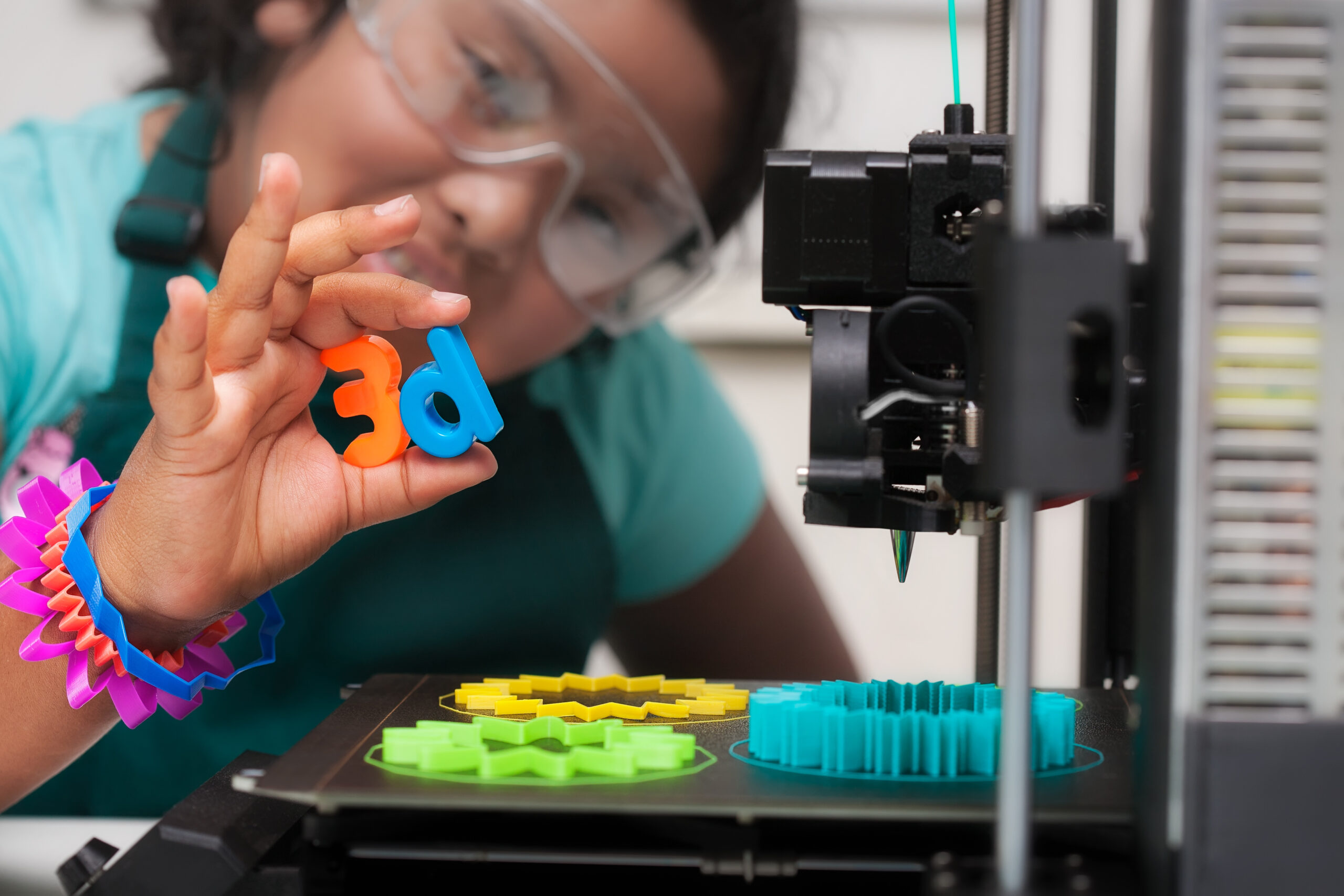
How to Reduce 3D Printer Emissions: Explore the Updated Safety Toolkit

UL Research Institutes’ Chemical Insights has updated its 3D Printer Safety toolkit to incorporate its latest research findings. The expanded resource offers practical, research-based guidance for reducing potential exposure to emissions from 3D printers.

As 3D printers become more common in classrooms, offices, makerspaces, laboratories, and homes, users need clear information to guide them in making safer choices. Chemical Insights has expanded its 3D Printer Safety toolkit to help users understand this technology’s emissions and make informed decisions that protect indoor air quality and human health.  

The 3D Printer Safety toolkit turns years of research into practical guidance on equipment and material selection, printer location, ventilation, and safer practices before, during, and after printing. Whether you are selecting a printer or reassessing an existing 3D printing setup, the toolkit can help you ask the right questions and identify opportunities to incorporate safety throughout the printing process.  

What Are 3D Printer Emissions, and Why Do They Matter?

3D printer emissions are airborne pollutants that may be released throughout the printing process. Chemical Insights’ research has found that 3D printers can emit particles, volatile organic compounds (VOCs), and metals. Exposure to some of these pollutants has been associated with irritation, inflammation, respiratory symptoms, cardiovascular disease, and other adverse health outcomes.  

However, what is released, and how much, can vary considerably between print jobs. Factors that can affect emissions and potential exposure include: 

  • Printer design 
  • Print material 
  • Operating temperature 
  • Ventilation 
  • Room conditions 

The first factor listed, printer design, serves as an important reference point throughout the toolkit because different printer types have distinct processes and potential sources of emissions. Drawing on Chemical Insights’ research, this resource looks separately at how two common consumer-grade printers operate and generate emissions.  

Filament-based 3D printers, also known as material extrusion printers, heat filament and build objects layer by layer. Resin-based 3D printers, also known as vat photopolymerization printers, use UV light to cure liquid resin. Their workflow typically extends beyond printing to washing and post-curing, and resin may also release emissions when stored in an open container, creating additional points where users may encounter chemicals beyond emissions.  

Reducing 3D Printer Emissions Starts with Three Questions

Reducing potential exposure starts with decisions made before pressing print. The toolkit organizes its guidance around three practical questions:  

  • What should you purchase? 
  • Where should the printer go? 
  • How should the printer be operated and maintained? 

1. What should you purchase?

Because emissions can vary based on both the printer and the material used, it’s crucial to evaluate options carefully. The toolkit outlines key considerations for comparing printers, filaments, and resins, including ANSI/CAN/UL 2904 certification and additional printer features to look for such as integrated enclosures and direct exhaust connections. The guidance can help users know what questions to ask and the information to verify before making a purchase.  

2. Where should the printer go?

The location of a printer can be as important as the equipment itself. A convenient open desk, classroom corner, or shared work area may not provide the separation or ventilation needed to manage emissions effectively.  

The toolkit helps users and facilities teams consider occupancy, airflow, outdoor exhaust, filtration, and whether the printer can be monitored safely before committing to a location. Instead of providing one solution for every setting, it provides a framework for evaluating the complete space.  

3. How should the printer be operated and maintained?

Safety planning doesn’t end when a printer is purchased and placed. Several aspects of printer operation and maintenance may affect exposure, including: 

  • Printer setup 
  • Temperature selection 
  • Observation during printing 
  • Cleaning 
  • Post-processing 
  • Storage 
  • Waste handling 

Because filament-based and resin-based printing involve different materials and workflows, the toolkit tailors its guidance to both so users can apply the considerations relevant to their printer and environment. 

The Best Way to Control 3D Printer Emissions

The most effective approach to controlling emissions is to eliminate the hazard at the source, if possible, before relying on other protective measures. The toolkit applies the National Institute for Occupational Safety and Health (NIOSH) hierarchy of controls to help readers prioritize emission-control strategies. In the context of 3D printing, that means looking first at purchasing and source-control decisions, followed by measures such as ventilation, enclosures and filtration, work practices, and appropriate PPE. The toolkit shows how this framework can be applied across purchasing, location, and operation. 

A Go-To Resource for 3D Printer Users and Decision-Makers

The updated toolkit is designed for people who purchase, locate, operate, oversee, or support filament-based or resin-based 3D printers in non-industrial indoor environments.  

It may be especially useful for: 

  • Educators and school administrators 
  • Makerspace and laboratory managers 
  • Environmental health and safety professionals 
  • Facility and building operations teams 
  • Researchers and healthcare professionals 
  • At-home 3D printer users 

Although the responsibility for purchasing, placement, and operations may rest with different people, the toolkit can help teams evaluate their 3D printing setup from a shared starting point.  

Explore the Updated 3D Printer Safety Toolkit

With the right information and planning, users can reduce potential exposure without limiting the value and versatility of 3D printing. Explore the updated 3D Printer Safety toolkit and access detailed guidance for making informed decisions throughout the 3D printing process.  

Check Out the Updated 3D Printer Safety Toolkit